
Explore the essential steps to buying property in Panama as a foreigner, from understanding ownership rules and completing due diligence to evaluating closing costs, financing, residency options, and investment considerations.
Whether you're searching for a home, a vacation property, or a real estate investment, this guide will help you understand the buying process, compare your options, and make more informed decisions.
Search Properties in Panama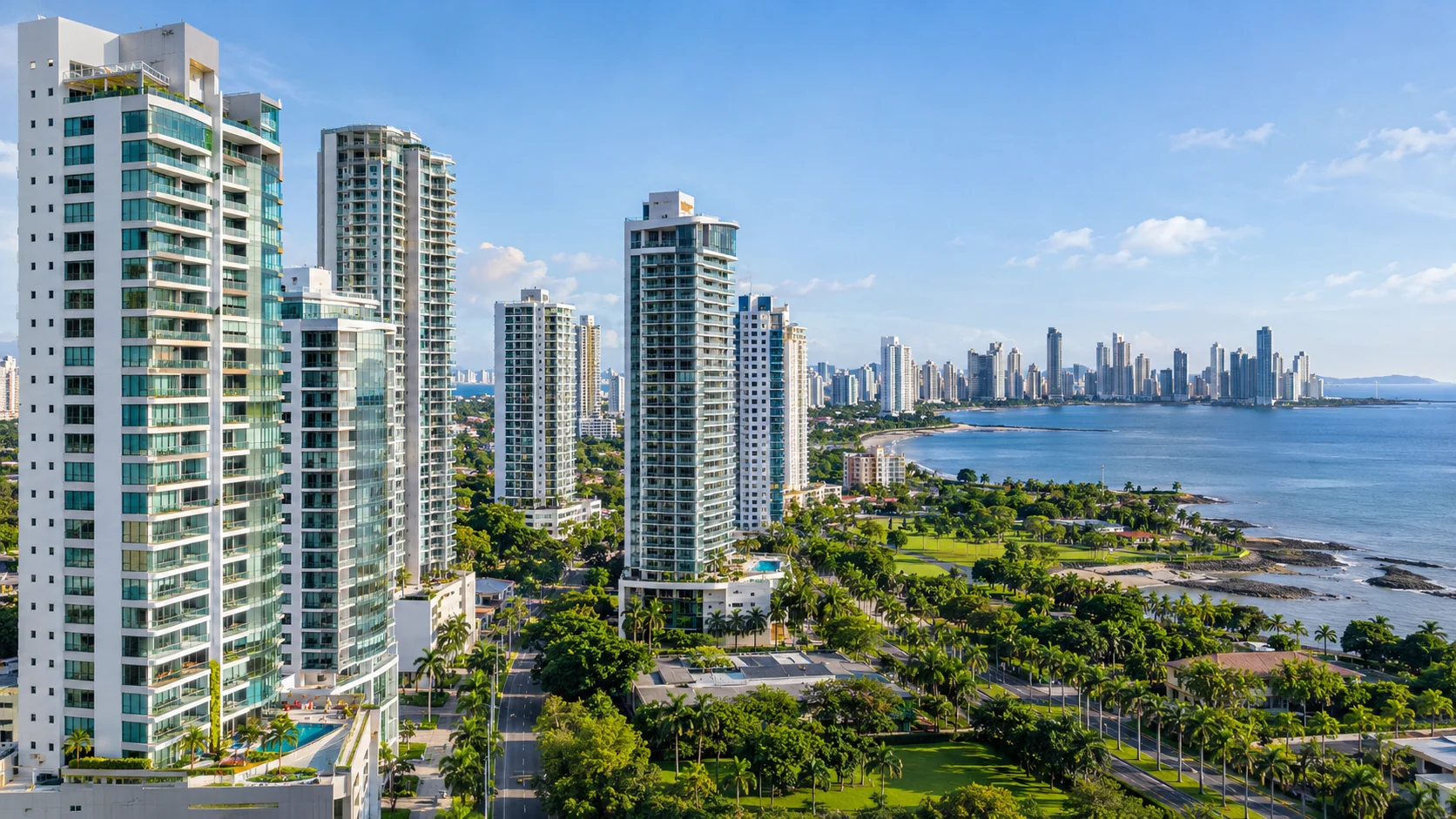
Yes. Foreign individuals can generally purchase and own titled real estate in Panama, including apartments, houses, and other qualifying properties. However, ownership rights are subject to specific legal restrictions, and not every type of land can be acquired under the same conditions.
For international buyers, the most important distinction is between registered, titled property and other forms of landholding, such as possessory rights. A property advertised for sale does not necessarily come with a registered ownership title.
Before making a commitment, buyers should confirm the property's legal status, the identity of the registered owner, and whether any restrictions or outstanding obligations affect the transaction.
Panama's Constitution also establishes restrictions on certain land near international borders and special conditions involving island territory.
Foreign buyers should therefore assess each property individually and obtain independent Panamanian legal advice before signing binding agreements or transferring substantial funds.
Understanding what is being purchased is just as important as choosing the right location.
Titled property
Titled real estate is property whose ownership is recorded in Panama's Public Registry (Registro Público). Registry information provides a basis for verifying the registered owner and examining recorded mortgages, liens, or other relevant rights.
Buyers should obtain and review current registry documentation rather than relying exclusively on advertisements, representations by sellers, or copies of older ownership documents.
Possessory rights
Possessory rights (derechos posesorios) are not equivalent to registered ownership title. Transactions involving these rights can present different legal risks, limitations, and regularization requirements.
Panama has specific legislation governing possessory rights and titling procedures in certain coastal and island areas. Buyers should not assume that land held through possessory rights can automatically be converted into titled property.
Border and island restrictions
Article 291 of Panama's Constitution restricts the acquisition of land located within ten kilometers of the country's international borders by foreign individuals, foreign legal entities, and certain entities with foreign capital.
Island territory is also subject to special constitutional conditions and legislation. Coastal properties may raise additional questions concerning public-use land, concessions, or applicable landholding rules.
The legal treatment depends on the property's location and classification. A qualified Panamanian attorney should assess these matters before any purchase commitment.
Buying through a company
A property may be offered for acquisition directly or through an entity. Purchasing through a company does not automatically remove restrictions on foreign ownership or eliminate the need to investigate the underlying property.
The legal, tax, and administrative consequences of the proposed ownership structure should be evaluated independently before proceeding.
Purchasing real estate in Panama usually involves several stages, from identifying a suitable property to completing registration. The precise sequence can differ depending on the property, the seller, the financing arrangements, and the structure of the transaction.
Begin by identifying your intended use: primary residence, second home, long-term rental, or another investment objective.
Compare locations, property types, asking prices, building conditions, accessibility, and ongoing ownership costs.
For apartments, consider the property's horizontal-property (propiedad horizontal, or PH) regime, building administration, maintenance charges, and any restrictions affecting intended use.
Shortlist properties that meet your requirements, but avoid treating a listing description as proof of ownership or legal compliance.
Once the parties agree on essential terms, a transaction may involve a promise-to-purchase agreement (promesa de compraventa).
The agreement should clearly address the property being acquired, purchase price, payment schedule, deposits, deadlines, and the conditions under which the transaction can proceed or be terminated.
Any deposit arrangements and contractual consequences should be reviewed by a qualified Panamanian attorney before funds are transferred.
The Public Registry recognizes registration procedures for certain promise-to-purchase agreements, but the requirements and suitability of registration should be assessed for the specific transaction.
Before closing, verify the property's legal and practical condition.
Due diligence typically includes examining current Public Registry information, confirming the seller's authority, reviewing recorded encumbrances, checking applicable clearances and outstanding obligations, and investigating any relevant construction, zoning, or PH matters.
Additional verification may be needed for land, unfinished developments, properties owned by legal entities, or transactions involving possessory rights.
This stage helps identify issues that could affect ownership, intended use, financing, or the ability to complete the transaction.
At closing, the parties complete the agreed transaction documents and arrange the payments and formalities required for the particular sale.
A real estate transfer typically involves a public deed (escritura pública) and the applicable documentation, clearances, taxes, and registration procedures.
The Public Registry's published property-sale requirements include real estate tax and utility clearances, applicable registration fees, and documentation of the real estate transfer tax process.
The allocation of transaction costs, payment arrangements, and closing obligations should be established in advance and reviewed by the professionals handling the transaction.
The transaction should not be treated as fully completed merely because the purchase agreement has been signed or payment has been made.
Registration of the relevant transfer documents with Panama's Public Registry is a fundamental part of the legal process for transferring registered real estate ownership.
After registration, the buyer should obtain updated registry documentation confirming the recorded ownership and review the final transaction records.
An independent legal professional can help verify that the transaction has been registered as intended and that any outstanding closing matters have been addressed.
Due diligence is one of the most important steps when buying property in Panama. It involves verifying the legal, financial, and physical condition of the property before completing the purchase.
A property may appear attractive in photographs or during a visit, but its legal status, outstanding obligations, or permitted uses may affect whether it is suitable for the buyer.
Verify ownership and title
Start by reviewing current information from Panama's Public Registry (Registro Público). Confirm that the seller is the registered owner and that the property details match the transaction documents.
A legal review should also identify registered mortgages, liens, restrictions, or other recorded interests that could affect the transfer.
If the seller is a company, verify its legal existence and the authority of the person signing on its behalf.
Check outstanding debts and obligations
Before closing, review applicable property tax clearances, water-service clearances, and other relevant obligations.
Panama's Public Registry lists property tax and IDAAN clearances among the requirements for registering real estate sales. Additional documents or payments may apply depending on the transaction.
For apartments, buyers should also investigate outstanding building maintenance fees, extraordinary assessments, and any obligations associated with the property.
Review the physical and regulatory condition
Legal ownership is only one part of due diligence.
Buyers should consider an independent inspection of the property's condition, including relevant structural, electrical, plumbing, and maintenance concerns.
For houses or land, additional checks may involve boundaries, access, approved plans, zoning, construction permits, and the property's suitability for the intended use.
For apartments, review the applicable horizontal-property (propiedad horizontal, or PH) rules, building administration, common-area obligations, and restrictions that may affect occupancy or rental plans.
Investigate special circumstances
Unfinished developments, properties involving possessory rights, company-held assets, and certain coastal or island properties may require additional legal and technical investigation.
Do not assume that an advertised property is fully titled, free from restrictions, or suitable for a particular use without supporting documentation.
Resolve issues before closing
Any significant discrepancy should be reviewed and addressed before the transaction is finalized.
Buyers should work with independent professionals to determine which documents, inspections, clearances, and contractual protections are appropriate for their specific purchase.
Due diligence cannot eliminate every risk, but it can help identify problems before they become costly disputes.
Engaging an independent Panamanian real estate attorney is strongly recommended when purchasing property in Panama, particularly for foreign buyers who may be unfamiliar with local legal procedures.
A real estate agent can assist with property searches, viewings, negotiations, and communication between the parties. However, an agent's role is different from that of a lawyer providing independent legal advice.
How a lawyer can help
A qualified attorney can assist by reviewing the property's registry information, examining the seller's authority, identifying legal restrictions, and assessing the documents involved in the transaction.
Legal counsel can also review the promise-to-purchase agreement, payment arrangements, closing conditions, and the documentation required for registration.
When purchasing through a company, financing the acquisition, or dealing with an unusual landholding arrangement, additional legal analysis may be necessary.
Independent representation matters
Buyers should understand whom each professional represents.
A lawyer acting for the seller or developer may have different responsibilities and interests from a lawyer engaged independently by the buyer.
For that reason, foreign purchasers should consider retaining their own legal adviser rather than assuming that professionals involved elsewhere in the transaction are representing their interests.
Before signing or transferring funds
Have your legal adviser review binding documents, contractual deadlines, deposits, payment instructions, and the consequences of withdrawing from the transaction.
Ask for a clear explanation of the closing process, expected documentation, professional fees, and any unresolved legal issues.
The purpose of independent legal representation is not merely to prepare documents. It is to help the buyer understand the transaction, evaluate its risks, and make an informed decision before becoming legally or financially committed.
When buying property in Panama, the purchase price is only one part of the financial commitment. A real estate transaction may also involve registration charges, notarial expenses, professional fees, financing costs, and applicable taxes.
Buyers should request a written estimate of the transaction costs before signing a binding agreement or transferring funds.
Real Estate Transfer Tax (ITBI)
Panama generally applies a Real Estate Transfer Tax (Impuesto de Transferencia de Bienes Inmuebles, or ITBI) to taxable property transfers. The general statutory rate is 2%, subject to the applicable tax base and any exemptions or special provisions.
The tax is generally a legal obligation of the seller. Panama's Law 546 of August 31, 2026, also expressly prohibits contractual provisions that transfer to the buyer the ITBI legally owed by the seller.
Special treatment for certain new homes
Law 546 of 2026 introduced special ITBI treatment for qualifying first sales of newly built homes.
Under this framework, the first B/.120,000 of the applicable taxable base may qualify for an exemption. Preferential treatment may apply to qualifying transactions within specified value ranges, subject to the law's requirements.
Eligibility depends on factors including the nature of the property, whether it is the first sale, and the timing of the transaction relative to the occupancy permit. Transitional rules may also apply.
Buyers should not assume that every newly built property automatically qualifies. The seller's legal and tax advisers should confirm eligibility and the correct treatment before closing.
Capital Gains Tax
A property sale may also trigger capital gains tax obligations.
Panama's tax administration distinguishes the real estate transfer tax from income tax arising from the sale. Depending on the seller and the nature of the transaction, specific declaration, payment, or withholding procedures may apply.
The seller's tax obligations should be reviewed by a qualified tax professional. Buyers should also ensure that the transaction documents properly address the declarations and payments required to complete registration.
Notary and Public Registry expenses
Property transfers typically involve a public deed and registration with Panama's Public Registry.
Buyers should budget for applicable notarial services, registration charges, document certifications, and other administrative expenses associated with the transaction.
The allocation of these costs should be established in the purchase agreement rather than assumed.
Legal and professional fees
Independent legal representation, property inspections, translations, and other professional services may create additional costs.
The total depends on the property's characteristics, the transaction structure, and the services required.
Buyers should request written fee estimates and clarify which services are included before committing to a transaction.
Financing-related expenses
Purchases involving mortgage financing may require additional expenses, such as appraisal fees, bank charges, insurance, and documentation or registration costs associated with the loan.
These expenses vary by lender and financing arrangement.
Compare the overall cost of financing rather than focusing only on the advertised interest rate or monthly mortgage payment.
Property taxes and ongoing ownership costs
Closing expenses should not be confused with the recurring costs of owning property.
Depending on the property and its tax classification, owners may face annual property taxes, building maintenance fees, insurance, utilities, and other operating expenses.
Tax exemptions or preferential classifications should be verified for the specific property rather than assumed from its advertised price or intended use.
For apartments, investigate ordinary maintenance charges and potential extraordinary assessments before purchasing.
Plan your total acquisition budget
Before closing, request a breakdown that distinguishes the property's purchase price, legally applicable seller taxes, buyer expenses, agreed contractual charges, financing costs, and recurring ownership obligations.
A qualified Panamanian attorney and tax adviser can help confirm how the relevant rules apply to a particular transaction.
This guide provides general educational information and should not replace transaction-specific legal or tax advice.
Foreign buyers considering property in Panama may explore mortgage financing through local banks. However, mortgage availability is not guaranteed, and eligibility depends on each financial institution's lending policies and the applicant's individual circumstances.
Banks may consider factors such as residency status, employment history, income stability, existing financial obligations, credit history, and the characteristics of the property being financed.
Mortgage eligibility
Some Panamanian banks publish specific requirements for foreign applicants, including additional identification, immigration, and employment documentation.
Requirements can differ significantly between applicants who reside and work in Panama and those whose income and principal residence are abroad.
Foreign buyers should contact prospective lenders before committing to a purchase, particularly if financing is essential to completing the transaction.
Income and financial documentation
A mortgage application may require proof of identity, employment or business income, financial statements, tax documentation, banking references, and information about existing debts.
Applicants whose income originates outside Panama may need additional verification or documentation.
Banks determine the documents they require according to their credit policies, regulatory obligations, and the applicant's risk profile.
Down payments and financing terms
The amount a bank is willing to finance can vary based on the applicant, property valuation, transaction type, and lender.
Interest rates, down-payment requirements, repayment periods, and financing conditions are not necessarily identical for residents and nonresidents.
Buyers should obtain written quotations and compare the total borrowing cost, including interest, insurance, commissions, appraisal expenses, and other applicable charges.
Property valuation and approval
Mortgage financing generally involves an assessment of the property offered as collateral.
A bank's valuation may differ from the seller's asking price or the agreed purchase price.
A preliminary financing discussion or quotation should not be treated as a final loan approval. Buyers should understand any financing conditions before signing agreements that create binding payment obligations.
Planning your mortgage budget
Evaluate whether projected monthly payments remain affordable alongside property taxes, building maintenance charges, insurance, utilities, and other ownership expenses.
InmoPanama's Mortgage Calculator can help estimate payments under different hypothetical loan amounts, terms, and interest rates.
Calculator results are illustrative. They do not represent an offer of credit, a lender-approved interest rate, or a guarantee of financing.
Before making a purchase commitment, confirm your eligibility and the complete financing terms directly with the bank.
Foreign buyers may consider opening a Panamanian bank account to manage property-related payments and ongoing expenses.
However, purchasing property in Panama does not automatically entitle a buyer to open a bank account, and a local bank account should not be assumed to be mandatory for every real estate transaction.
Banks maintain their own account-opening procedures, subject to Panamanian banking regulations and customer due diligence requirements.
Identification and verification
Banks generally require applicants to provide valid identification and information that allows the institution to verify their identity and understand the purpose of the banking relationship.
Additional information may concern occupation, income, business activities, expected account transactions, tax residence, and the source of funds.
The exact requirements depend on the bank, the type of account, and the customer's circumstances.
Source of funds
Banks may request documentation explaining the origin of money that will be deposited or transferred.
For a property buyer, this can involve financial records or supporting documents associated with savings, employment, business income, investments, or a property sale.
Documentation requirements should be confirmed with the institution handling the account or transaction.
Residents and nonresidents
Foreign nationals may face different onboarding procedures depending on their immigration status, location, financial profile, and the bank's policies.
An institution may request additional documents, an in-person meeting, or other verification procedures before deciding whether to establish a banking relationship.
No applicant should assume that approval is automatic.
Planning property-related payments
Before transferring substantial funds, confirm the payment procedure with the professionals handling the transaction and the financial institutions involved.
Verify recipient details independently, clarify applicable transfer charges, and allow sufficient time for banking reviews or international transfers.
For a more detailed explanation of personal and corporate banking considerations, consult InmoPanama's existing guide to opening bank accounts in Panama.
Banking requirements and institutional policies can change. Buyers should verify current procedures directly with their chosen bank before making financial arrangements.
Purchasing property in Panama and obtaining immigration residency are two separate legal matters.
Foreign individuals may generally acquire qualifying real estate without automatically becoming residents. Likewise, owning property in Panama does not, by itself, grant the buyer permanent residency, citizenship, or permission to work in the country.
Panama has immigration categories that may allow qualifying foreign investors to apply for residency, subject to the applicable laws, investment requirements, documentation, and government approval.
Qualified Investor Residency
Panama maintains a permanent residency subcategory known as Inversionista Calificado (Qualified Investor).
Executive Decree No. 17 of September 8, 2026, published in the Official Gazette on September 16, 2026, establishes the updated regulatory framework for this subcategory, replacing Executive Decree No. 722 of 2020 and its amendments.
The program includes qualifying investment arrangements, but not every real estate purchase automatically satisfies the conditions for immigration eligibility.
Applicants should verify the investment modality, minimum qualifying amount, required documentation, ownership conditions, and other applicable requirements under the current regulations.
Property ownership versus immigration status
A property purchase is a real estate transaction. An immigration application is a separate administrative and legal process.
Even when a purchase may qualify as an eligible investment, the applicant must satisfy the applicable immigration requirements and complete the prescribed procedures.
Neither a property listing nor a purchase agreement should be interpreted as a guarantee of residency approval.
Planning before purchasing
Buyers interested in both property ownership and residency should obtain immigration advice before committing to a particular investment.
The timing and structure of a transaction can matter when a buyer intends to use an investment to support an immigration application.
A qualified Panamanian immigration attorney can help determine whether a proposed transaction is compatible with the current requirements and identify the documentation that may be necessary.
Verify the current rules
Immigration laws, eligibility thresholds, qualifying investment categories, and administrative procedures can change.
Before making a financial commitment based on immigration objectives, consult the Servicio Nacional de Migración and the applicable regulations published in Panama's Official Gazette.
This section provides general educational information only. It does not constitute immigration or legal advice, and it does not guarantee eligibility or approval under any residency program.
Panama offers different property markets, from urban apartments in Panama City to beach communities and homes in the western highlands.
The best location depends on how you plan to use the property, your budget, preferred lifestyle, and the services you need nearby. A location that works well for a permanent residence may not be the right choice for a vacation home or a rental investment.
Urban living in Panama City
Costa del Este, Punta Pacífica, and Santa María are among the areas foreign buyers may consider when looking for residential properties in Panama City.
These areas offer different combinations of apartment living, residential developments, commercial surroundings, and access to urban amenities.
Buyers should compare individual buildings and neighborhoods rather than assume that every property within the same area has identical features or operating costs.
Consider commuting routes, traffic, building administration, maintenance fees, and access to the services that matter to you.
Historic surroundings and distinctive properties
Casco Antiguo offers a different urban environment, characterized by historic architecture, cultural attractions, restaurants, and a distinctive neighborhood setting.
Properties in historic areas may require additional attention to building condition, renovation requirements, permitted uses, and applicable heritage protections.
Buyers considering restoration projects or rental operations should verify the relevant regulations and practical limitations before purchasing.
Beach and coastal communities
Coronado and Pedasí may appeal to buyers interested in coastal living, second homes, or a lifestyle outside central Panama City.
However, coastal locations can differ substantially in accessibility, infrastructure, healthcare availability, utilities, and property characteristics.
For individual properties, investigate legal title, access, maintenance requirements, exposure to environmental conditions, and any applicable coastal restrictions.
Do not assume that owning a property near a beach automatically permits a particular rental activity or development project.
Mountain living in Chiriquí
Boquete is an option for buyers interested in Panama's western highlands, mountain scenery, and a different climate from the capital or coastal regions.
When evaluating properties in the area, consider access roads, terrain, water availability, construction condition, and proximity to essential services.
Land purchases may require particular attention to boundaries, registered title, permitted uses, and the physical characteristics of the site.
Compare properties, not just locations
A neighborhood's reputation should be a starting point rather than a substitute for property-specific research.
Visit the area when possible, compare properties with similar characteristics, and evaluate the costs and practical considerations of ownership.
The property listings linked below can help you explore homes and apartments currently advertised for sale in seven selected areas of Panama.
Listings and asking prices can change. Their presence on InmoPanama does not independently establish legal title, investment performance, or suitability for a particular buyer.
Real estate investment decisions should be based on the property's individual characteristics, the buyer's financial objectives, and a realistic assessment of costs and risks.
A desirable location or attractive listing price does not guarantee rental income, appreciation, or a profitable resale.
Define your investment objective
Before purchasing, decide whether your primary goal is personal use, long-term rental income, future resale, or a combination of these purposes.
These objectives can require different property characteristics, financing arrangements, and ownership strategies.
A property that is convenient for personal use may not produce the same results as one selected primarily for rental demand.
Evaluate the full cost of ownership
The purchase price is only the starting point.
Your financial assessment should account for applicable acquisition expenses, legal fees, financing costs, property taxes, insurance, maintenance, repairs, utilities, and potential building assessments.
For rental properties, include management expenses, periods without tenants, tenant-related costs, and a reasonable allowance for unexpected repairs.
Ignoring these expenses can lead to unrealistic expectations about investment performance.
Assess rental assumptions carefully
Projected rental income should be supported by relevant comparable properties and current market evidence.
Advertised rental prices do not necessarily represent completed rental transactions or guaranteed occupancy.
Review the property's location, condition, amenities, target tenant profile, and the rules governing its intended rental use.
Short-term rental activities may be subject to legal, municipal, building, or other restrictions. Verify the rules applicable to the particular property before relying on short-term rental projections.
Consider liquidity and resale risk
Real estate is not necessarily easy to sell quickly.
The time required to find a buyer and complete a transaction depends on market conditions, the property's characteristics, its asking price, and other factors.
Buyers should consider how long they may need to hold the property and whether they could meet their financial obligations if a sale or rental takes longer than expected.
Future appreciation should be treated as uncertain rather than guaranteed.
Compare scenarios before committing
A useful investment assessment considers more than one possible outcome.
Compare conservative, moderate, and optimistic assumptions for rental income, occupancy, operating expenses, financing, and eventual resale.
InmoPanama's investment tools can help organize hypothetical figures, but their outputs depend on the information entered and should not be interpreted as verified market forecasts.
For decisions involving significant financial commitments, consider independent legal, tax, and financial advice.
The purpose of this analysis is to understand the possible benefits, limitations, and risks of a specific property before making a purchase.
Renting out a property in Panama may be part of a foreign buyer's financial or lifestyle plan. However, owning real estate does not automatically mean that every type of rental activity is permitted.
Before purchasing a property for rental purposes, buyers should review the applicable laws, building rules, anticipated expenses, and practical responsibilities of managing tenants.
Long-term residential rentals
Long-term rentals may appeal to owners seeking income from tenants who occupy a property for an extended period.
Before making an investment decision, research comparable rental properties, likely tenant demand, property condition, maintenance requirements, and the costs of managing the rental.
Rental income can fluctuate, and periods without tenants should be included in any financial projection.
Owners should also obtain advice on the applicable rental agreement, legal obligations, and procedures for handling disputes or recovering possession.
Short-term rentals and tourist accommodation
Short-term rental activities may be subject to additional restrictions and authorization requirements.
In Panama City, the law establishes specific restrictions on rentals lasting fewer than 45 days when the operator does not hold the required tourist accommodation permit.
The legal framework may differ according to the property's location, the nature of the activity, and the authorizations involved.
Buyers should verify the current requirements with the competent authorities before purchasing or advertising a property for short-term stays.
The availability of listings on online booking platforms should not be treated as evidence that a particular property's rental activity is legally authorized.
Horizontal-property rules
Apartments and other properties governed by Panama's horizontal-property regime (propiedad horizontal, or PH) may be subject to building regulations that affect their use.
Prospective buyers should review the applicable condominium documents, permitted uses, building policies, and responsibilities toward tenants and other occupants.
Maintenance fees, extraordinary assessments, and obligations relating to common areas may also affect the property's financial performance.
Do not assume that rental practices permitted in one building will necessarily be permitted in another.
Property management and operating expenses
Owners who live outside Panama may need local assistance with tenant communication, inspections, repairs, maintenance, and administrative matters.
Property management services can simplify some responsibilities, but their fees and scope of work should be considered when assessing potential rental income.
Include insurance, utilities, taxes, repairs, replacement of furnishings where applicable, and periods of vacancy in your operating budget.
Rental income and tax considerations
Income generated from renting property may create tax reporting or payment obligations.
The applicable treatment depends on the owner's circumstances, the nature of the rental activity, and the relevant legal and tax rules.
Buyers should seek qualified Panamanian tax advice before relying on projected net rental returns.
Evaluate before committing
A realistic rental strategy should consider legal eligibility, market evidence, ongoing costs, management responsibilities, and the possibility of lower-than-expected income.
Rental projections are estimates, not guarantees. A property should be evaluated on its individual merits rather than on advertised income claims alone.
Buying property in another country involves decisions that may be unfamiliar to first-time international buyers.
Understanding common mistakes can help reduce avoidable risks, improve the quality of due diligence, and support a more informed purchase decision.
Relying only on listing information
Real estate advertisements are useful for discovering properties, but they do not replace independent verification.
Confirm the registered owner, property description, legal title, outstanding obligations, and any restrictions that could affect the transaction.
Do not assume that photographs, advertised dimensions, or descriptions establish the property's legal or physical condition.
Skipping independent legal advice
Failing to obtain appropriate legal advice can leave buyers exposed to contractual, ownership, or registration issues.
Consider engaging an independent Panamanian attorney before signing binding documents or transferring substantial funds.
Understand whom each professional represents and whether their advice is independent of the seller or developer.
Underestimating the total cost
Focusing only on the asking price can lead to an incomplete financial plan.
Budget for applicable closing expenses, professional fees, financing charges, taxes, maintenance, insurance, repairs, and other ownership costs.
For investment properties, account for vacancies and unexpected expenses rather than relying exclusively on projected gross income.
Assuming financing or residency is guaranteed
Property ownership does not automatically provide immigration residency, permission to work, or mortgage approval.
Banks and immigration authorities apply separate eligibility requirements and decision-making procedures.
Confirm your options directly with the relevant institution or a qualified professional before making commitments that depend on financing or immigration outcomes.
Ignoring building and rental restrictions
A property may not be suitable for every intended use.
Before purchasing, review applicable zoning, horizontal-property regulations, building policies, and the rules governing any proposed rental activity.
This is particularly important when a buyer intends to operate tourist accommodation or undertake renovations.
Failing to inspect the property
Photographs and virtual tours may not reveal structural concerns, maintenance problems, water damage, or other physical conditions.
Consider an independent property inspection and investigate any additional technical concerns appropriate to the property type.
For land, pay particular attention to access, boundaries, terrain, utilities, and permitted uses.
Rushing contracts and payments
Pressure to act quickly should not replace careful document review.
Understand deposits, payment schedules, closing conditions, cancellation provisions, and the consequences of a transaction failing to close.
Verify payment instructions through trusted, independent channels before transferring money.
Making decisions based on guaranteed returns
Claims about appreciation, occupancy rates, or rental yields should be evaluated critically.
Compare realistic scenarios and seek supporting evidence rather than assuming advertised projections will be achieved.
A successful property purchase depends on understanding the asset, its costs, its legal status, and the risks that remain after the transaction is completed.
Yes. Foreign individuals can generally purchase and own titled real estate in Panama, including houses and apartments.
However, certain properties are subject to legal restrictions. Panama's Constitution limits foreign ownership of land within ten kilometers of international borders and establishes special conditions for island territory.
Before purchasing, confirm the property's registered ownership, legal classification, and any applicable restrictions with an independent Panamanian attorney.
Generally, you do not need to become a Panamanian resident simply to purchase qualifying real estate.
Property ownership and immigration residency are separate legal matters. Buying a home does not automatically grant permanent residency, citizenship, or permission to work.
If residency is part of your plan, obtain immigration advice before making a purchase commitment.
Foreign buyers may be eligible for mortgage financing through Panamanian banks, but approval is not guaranteed.
Lenders assess factors such as income, creditworthiness, residency status, existing obligations, and the property being financed.
Requirements, down payments, and loan terms vary by bank and applicant. Contact potential lenders directly and obtain written financing terms before relying on a mortgage to complete your purchase.
A property purchase may involve notarial expenses, Public Registry charges, legal fees, inspections, and financing-related costs.
Panama also applies real estate transfer taxes under the relevant rules. The ITBI is generally a seller obligation, and Law 546 of 2026 introduced special treatment for qualifying first sales of newly built homes.
The amounts and allocation of expenses depend on the transaction. Request a written closing-cost breakdown from your attorney before signing.
No. Owning real estate in Panama does not automatically establish immigration residency.
Panama offers immigration pathways for certain qualifying investments, including the Qualified Investor category, but eligibility depends on the applicable requirements and approval procedures.
A property purchase should not be considered a guarantee of residency. Consult a qualified immigration attorney if obtaining residency is one of your objectives.
A property transaction may involve arrangements that allow a buyer to complete certain steps without being physically present in Panama, depending on the circumstances and applicable formalities.
However, remote purchasing does not eliminate the need for ownership verification, due diligence, properly executed documents, secure payment procedures, and registration.
Before proceeding, ask an independent Panamanian attorney which steps can legally be completed remotely and whether a valid power of attorney or other formal documentation is necessary.
The documents required depend on the transaction, the property, the parties involved, and whether financing is used.
Buyers should expect identity verification, contractual documentation, and relevant financial information. The transaction may also require current Public Registry records, tax and utility clearances, and documents supporting the public deed and registration.
Mortgage lenders and transactions involving companies may require additional documentation.
Ask your attorney and, where applicable, your bank for a transaction-specific checklist.
Yes. Panama's Constitution restricts foreign acquisition of land located within ten kilometers of international borders and establishes special conditions for island territory.
Coastal properties may also raise questions involving public-use land, concessions, possessory rights, environmental limitations, or other applicable rules.
Not every coastal property has the same legal status. Before purchasing, have an independent Panamanian attorney verify the property's classification, registered title, and applicable restrictions.
Hiring an independent Panamanian real estate attorney is strongly recommended, particularly for foreign buyers.
A lawyer can help review ownership records, contractual terms, seller authority, recorded encumbrances, closing documents, and the registration process.
A real estate agent and a lawyer perform different roles. Independent legal advice can help you understand the transaction and its risks before signing agreements or transferring substantial funds.
The best location depends on your budget, lifestyle, intended property use, and personal priorities.
Buyers interested in Panama City may explore Costa del Este, Punta Pacífica, Santa María, or Casco Antiguo. Coronado and Pedasí offer different coastal environments, while Boquete may appeal to buyers interested in mountain living.
Compare individual properties, infrastructure, accessibility, maintenance costs, and applicable regulations rather than relying solely on a neighborhood's reputation. There is no single location that is best for every foreign buyer.
Are you a real estate agent? Publish your for-sale and for-rent listings on InmoPanama at no cost and reach thousands of buyers in Panama.

InmoPanama is Panama's leading real estate portal. Find apartments, houses, offices and more for sale and for rent.
© 2026 InmoPanama. All rights reserved.